
In the late 80s and early 90s in Chile, there was not much entertainment for children, aside from some television and a few public squares with metal playground equipment (slides, seesaws, and spinning circular seats). In Santiago there were two amusement parks, and there were probably other traveling ones, mostly machines and “corporeos” (people dressed as animals), but I would say these were reserved for wealthier social classes.
So when, after the month of August (with spring approaching), a circus arrived in the neighborhood, it created a revolution. I remember this “poor circus” that arrived in the neighborhood with an entrance fee of 200 Chilean pesos (which in dollars was approximately 50 cents). Most of the children started collecting coins and insisting to our mothers. My brothers and I were lucky that ours agreed to take us, and we attended this show of trained dogs, clowns, jugglers, contortionists, and acrobats.
At that time, we did not pay much attention to my mother’s comments about the torn tent and the fleas. For us, the cotton candy and seeing a circus just steps away from home was the most interesting thing that had happened in the neighborhood since they distributed for free crates of grapes.
Years later, we were lucky enough to visit better circuses that arrived with more or less publicity, prestige, and fame in Chile. That was the case when we went to Circus Vostok, which brought lions and elephants that threw rubber balls to the audience (we caught one). And years later, the Tihany circus, where not only did we take a photo with the lions (now considered animal abuse), but we also saw white tigers announce the arrival of a Rolls Royce onto this spectacular stage.
I had not thought much about the circus, probably because it simply “is there,” not even when I had the luck to have a job related to Cirque du Soleil. As a young adult, I was hired to operate a technological installation in the lobby of the tent for the Alegría show, where, through an agreement between the circus and its sponsor, we had to remain “hidden inside a box” carrying out digital edits of guests accompanied by the characters from the show, with the purpose of marketing for those sponsors (Chilean banks).
From this circus, what impressed me the most, already having a background in industrial design, were the tensile structures of the tents and the quality with which the music, costumes, and spectacle merged into what would become a lasting feeling.
It is Prague, and a little more than 20 years after having seen the Alegría show from the front row. I had seen some symphonic theater in Chile and other countries, but I would not say that I was even close to being a connoisseur, much less an expert on the subject.
So it came as a surprise when they told me about the Arena Festival of the Forman brothers (which also happens to be the surname of my grandmother, also committed good audience), and when we started choosing a show, among the few available options we found an italian title, Sono Io (It’s me), by Circus Ronaldo.
This small tent had a continuous grandstand that surrounded a stage with two poles and decorated with clothes hangers. In the center, in a bathtub, there was a man who used the water from the bathtub to wash dishes and made an old tape radio work, where he had recorded the applause from his circus days.
“Sono io” (It’s me) he said, nothing more.
This sad circus artist became happy with the recorded applause when he was surprised by the visit of his son, who was there to show him the artist he had become.
Little by little, the son began encouraging his father to juggle, and they started challenging each other in the areas of juggling, acrobatics, and music, taking this nostalgia from the past into the greatest of shows, having as a stage the electrical wiring, the bathtub, and devices that appeared and surprised.
At least for me, it made me cry with laughter (llorar de la risa) and that is why I declare: In my opinion Circus Ronaldo is the best circus in the world.
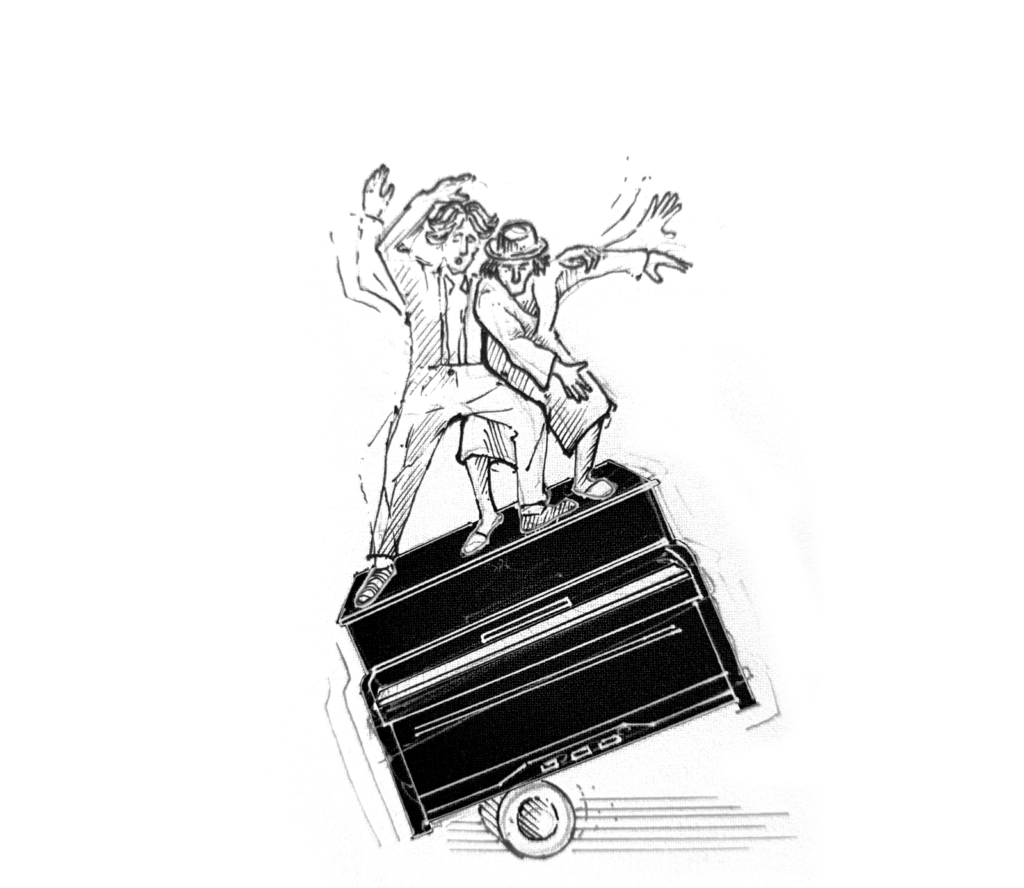
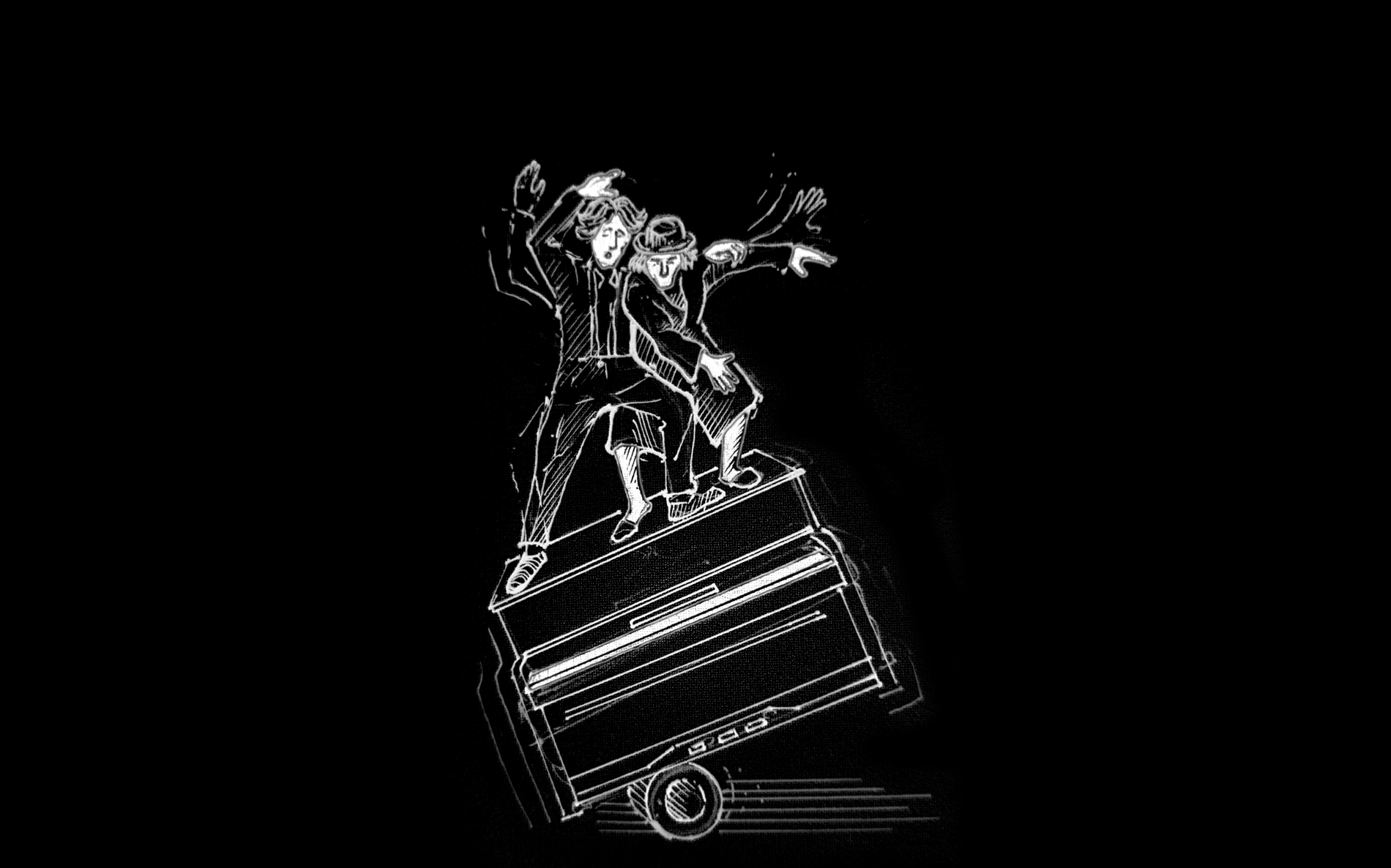
a little drawing for this great artists