
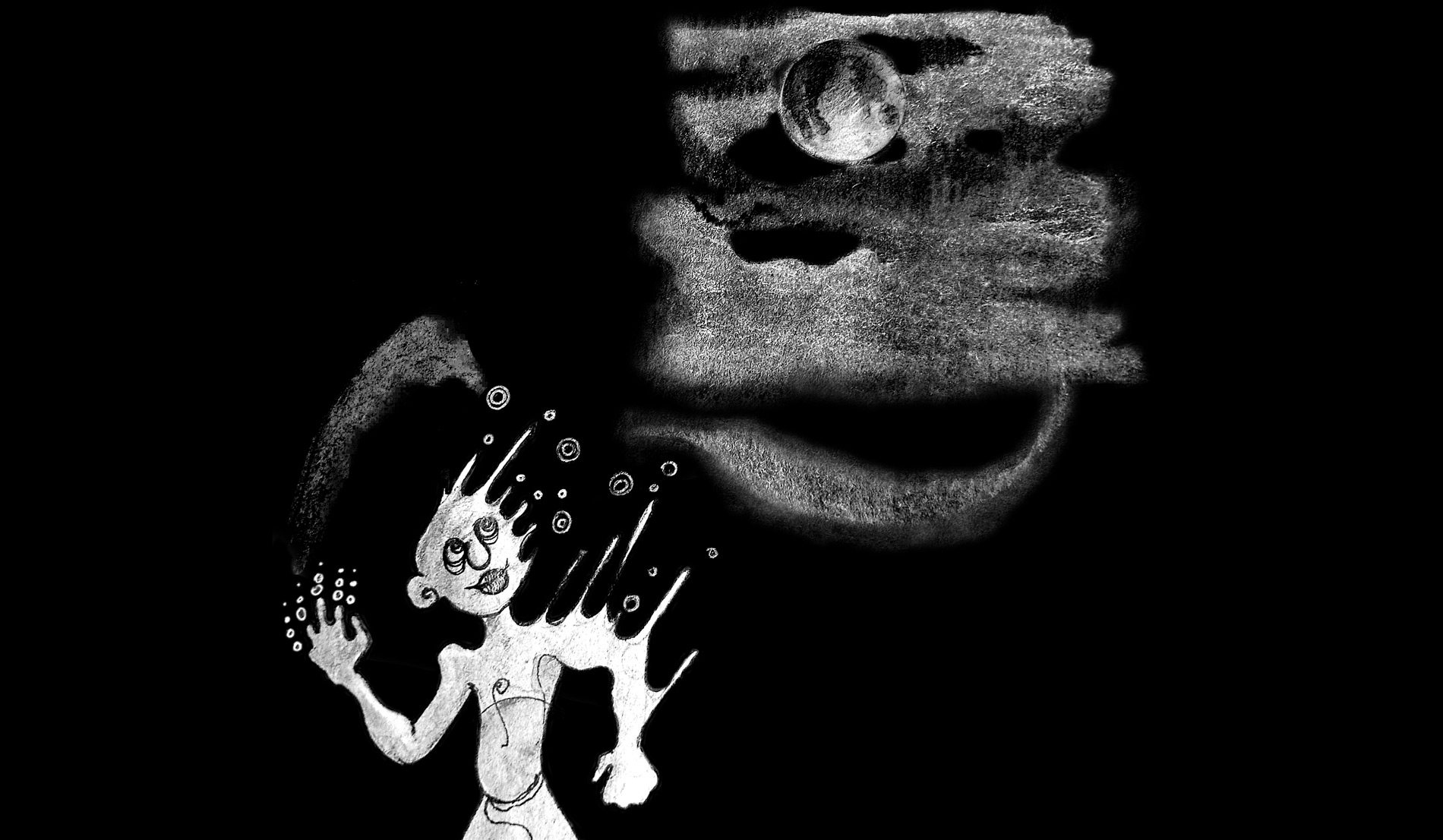
For a pencil drawing to make its way onto a screen, it needs to undergo considerable transformation. Turning black on white into white on black is an even greater challenge—not to mention when the paper is another colour. In these instances, even more than in the previous ones, you will have to make decisions that go beyond technical skill and dedication.
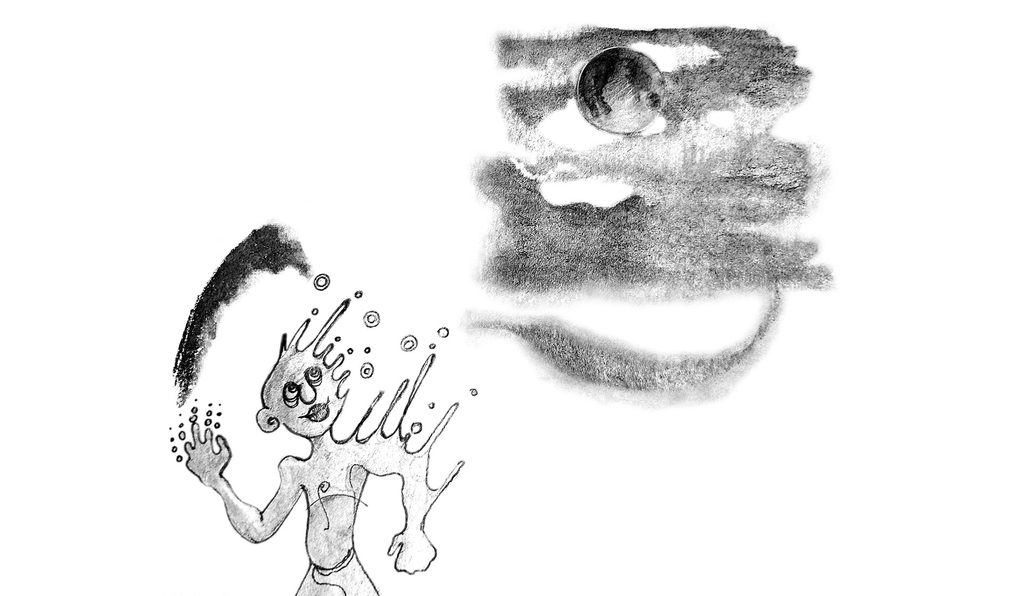
black and white digital version
Drawing is defined by the line, whereas other pictorial formats reject it. This is something that occurs when changing the background colour. In this intermediate situation, it becomes necessary to determine the behaviour of white, black, the intermediate tones, and the contrasts. The challenge is to preserve the marks and textures as much as possible.
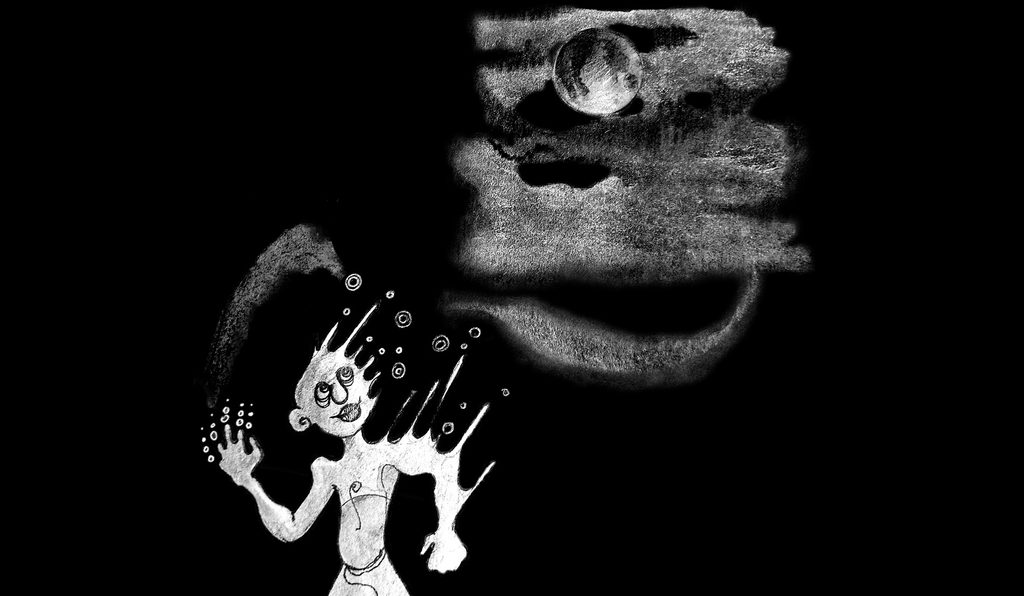
white and black digital version
This is how a drawing made twenty years ago gives rise to three digital clones: white on black, black on white, and “enhanced original” (see below). Something has to be done—or at least, this is how I have always thought about it. Originals on paper become something else when they reach the screen, simply because light behaves differently.
I’m sharing this exercise in adapting a message for print or screen. Does the idea of having to adapt the message to the medium resonate with you?
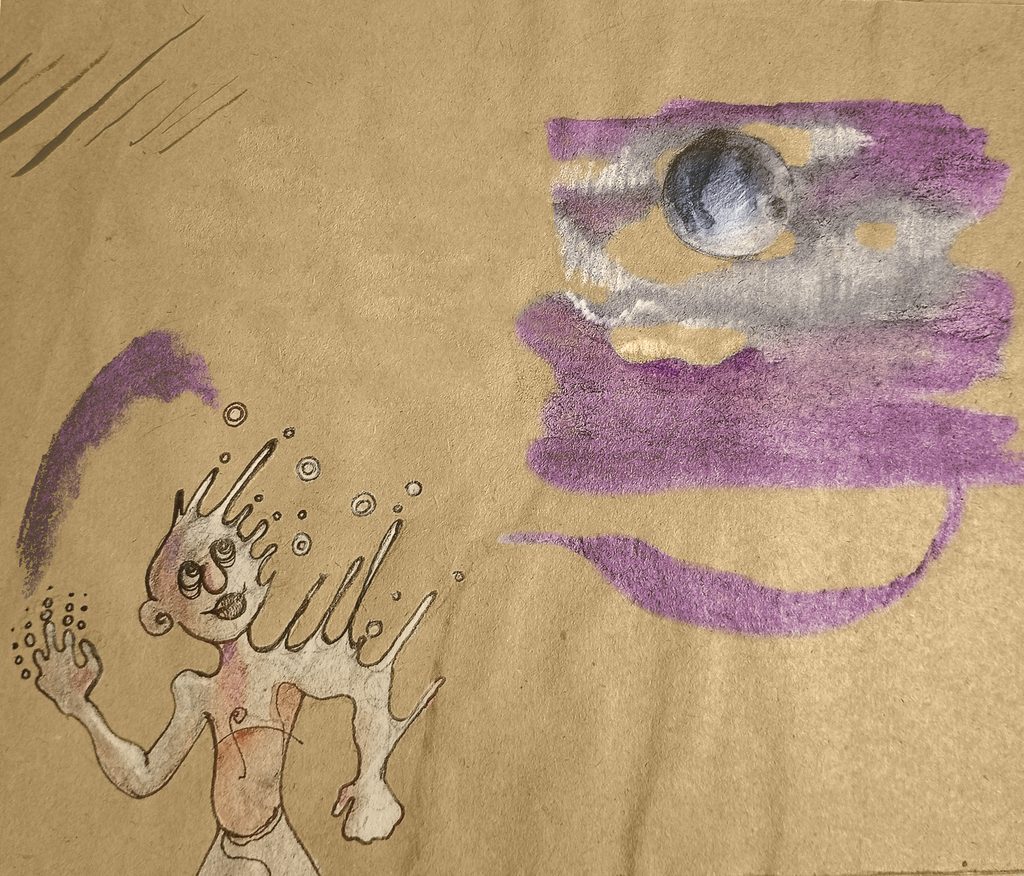
“Noche en la playa Pan de Azucar”
ink and water colors on brown paper – digitally enhanced original
traveling journal 2005